
Powered By



 Continue with Facebook
Continue with Email
Continue with Facebook
Continue with Email
Living with chronic hives, also called chronic urticaria, can be uncomfortable. “Chronic” means something that lasts a long time or keeps coming back, rather than going away quickly. If you’ve searched for information about chronic hives, you may have found information on chronic hives and cancer. It makes sense to have questions or feel concerned about this.
Current guidelines don’t suggest routine cancer screening for people with chronic hives. Still, a few cases have made researchers take another look at this possible link. In this article, we’ll look at what research says about chronic hives and cancer, clear up common myths, and share when to talk with your healthcare provider.
Although the research on the topic is limited, a few studies have shown a relationship between chronic hives and cancer. While some scientists think there might be a link between the two, others aren’t sure.
The idea came up decades ago. In 1942, doctors reported a case where a man’s hives went away after doctors removed his cancer. Since then, there have been a few reports of people having hives around the time they were diagnosed with cancer. Some review studies suggest that, in rare cases, certain cancers may trigger different types of urticaria.
Some research shows that a few people had chronic hives before they were diagnosed with cancer. This has happened with the following types of cancer:
This can make people wonder if the two are linked or if they just happen in the same person. Both are fairly common today, so some people may have both at the same time.
A large study in Taiwan found a higher rate of cancer in people with chronic hives, especially blood cancers, like non-Hodgkin lymphoma. Studies in Italy and Korea reported slightly increased rates of cancers such as stomach, thyroid, liver, and prostate cancer in people with chronic hives. Yet other research, including a large study from Sweden, found no connection at all.
Other studies, however, paint a more complicated picture involving treatment. In one study of 1,493 people with chronic hives, only a very small portion also had cancer. For those individuals, their hives typically didn’t improve with standard treatments, but did improve once their cancer was treated, and sometimes came back if the cancer returned.
Because both hives and cancer are common, they might sometimes happen together by chance. But when hives go away after treating cancer and come back if the cancer returns, that suggests they might be connected. But again, more research is needed to understand this connection.
Chronic hives and cancer share some risk factors that may help explain a possible connection. For example, both are more common in people with autoimmune diseases, which happen when the immune system attacks the body’s own tissues. Long-lasting infections may also change how the immune system works in ways tied to both conditions.
Inflammation may be another piece of the puzzle. With chronic hives, the body releases histamine and other chemicals that cause itching and swelling. Long-lasting inflammation can also raise the risk of some cancers. This does not mean one causes the other, but it shows they can overlap.
You may wonder whether some cancers are more likely than others to occur in people with chronic hives. While case reports have mentioned thyroid, blood, and gastrointestinal cancers, larger studies haven’t consistently shown a strong link to any one type. More research is needed to understand whether these patterns are connected in a specific way or if they just happen together by chance.
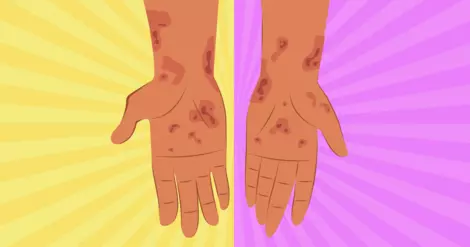
When we think of cancer and cancer treatment, we think of all the different changes your body experiences. Your skin is no exception. Skin problems are common in cancer and cancer treatment. Some skin changes can look like hives. But hives are not usually a cancer symptom.
Some skin rashes or changes may look similar to hives but are caused by cancer or its treatments. These include:
Let your healthcare provider know if you notice any new or unusual skin changes.
Some studies have suggested a link, but findings are rare and mixed. Several medical organizations don’t recommend routine screening for cancer when a person has chronic hives. The few reported studies haven’t found a solid relationship between cancer and chronic urticaria. Instead, doctors should look at each person’s symptoms and history to decide what testing is needed.
Make sure to consult with your healthcare provider if you’re experiencing any new skin changes or worsening symptoms. They can help with diagnosis, tests, treatment, and next steps.
For most people with chronic hives, cancer is not a concern. However, scientists hope that ongoing research will help clarify who might benefit from additional monitoring. Until more is known, it’s important to pay attention to your body and communicate any new or unusual symptoms to your healthcare provider.
On MyChronicHivesTeam, people share their experiences with chronic hives, get advice, and find support from others who understand.
Have you been diagnosed with chronic hives and cancer? Let others know in the comments below.
Get updates directly to your inbox.



 Continue with Facebook
Continue with Email
Continue with Facebook
Continue with Email
Continue with Facebook
Continue with Email
Continue with Facebook
Continue with Email
Become a member to get even more





 Join
Join

 Your Privacy Choices

This is a member-feature!
Sign up for free to view article comments.
I had a breakout of hives across my upper chest about a year before I was diagnosed with Lobular Breast Cancer.It went away and I never had any other issue with it.Found out a year later I had Lobular… read more
We'd love to hear from you! Please share your name and email to post and read comments.
You'll also get the latest articles directly to your inbox.