
Powered By


 Continue with Facebook
Continue with Email
Continue with Facebook
Continue with Email
Waking up to itchy welts on your arms can be frustrating. You might instantly blame yesterday’s dinner, but if the itch persists for weeks, it’s time to investigate further.
While food allergies and chronic hives look the same on your skin — thanks to a chemical called histamine — they are actually distinct conditions. They have different causes and require different treatments. Here, we’ll explore the similarities and differences to help you understand what’s happening in your body and what to do next.
Food allergies and chronic hives (also called chronic urticaria) have a few key things in common. Both conditions involve your immune system and can result in itchy skin. Here’s a look at their similarities.
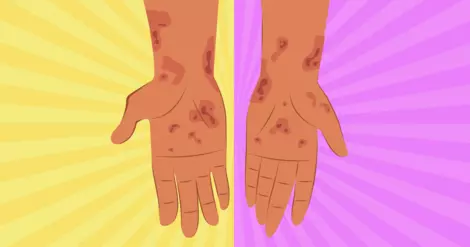
The most obvious similarity is their appearance. Both food allergies and chronic hives can produce urticaria — those raised, red or pink welts that itch intensely. These welts, often called wheals, can appear anywhere on your body and vary in size from small dots to large patches. The itching can be distracting and uncomfortable, regardless of what’s causing it.
Beyond the surface rash, both conditions can lead to angioedema — a type of swelling that happens in deeper layers of your skin. This swelling typically affects areas like your eyelids, lips, tongue, or throat. When it happens, these areas may feel tight or puffy.
It’s also important to stay alert if you notice swelling in your throat or tongue. This specific type of swelling can be a sign of anaphylaxis, a serious reaction that can restrict your breathing and requires immediate medical attention.
At the cellular level, both conditions work through a similar mechanism. When certain cells in your body, called mast cells, get activated, they release histamine and other chemicals. Histamine makes blood vessels leak fluid into surrounding tissue, which creates the swelling and itching you experience. This shared pathway is why antihistamines can help with symptoms in both cases — though they work better for some people than others.
Food allergies and chronic hives are fundamentally different conditions. These differences matter because they affect how fast symptoms show up and how your healthcare provider will find the right treatment for you.
Food allergies can affect more than just your skin. Symptoms may start within minutes or up to two hours after eating a trigger food. These signs can include hives along with stomach cramps, nausea, vomiting, or trouble breathing. Since this severe allergic reaction involves several parts of your body at once, it can be life-threatening and requires urgent medical care.
In contrast, chronic hives usually stay on your skin. You may see welts or feel deeper swelling, but you typically won’t experience breathing problems or digestive issues at the same time. In this case, the hives are the primary symptom rather than part of a broader reaction.
Timing is another significant difference between these conditions. Food allergies tend to happen fast and follow a clear pattern: symptoms usually appear within minutes or hours of eating a trigger food. The connection between eating the food and the reaction is typically immediate and obvious.
Chronic hives, however, are much less predictable. They might appear suddenly and come and go without a clear cause. You could have clear skin one day and wake up with hives the next. These flare-ups can last for weeks, months, or even years. Unlike food allergies, there’s often no obvious trigger to explain when or why the hives appeared.
Food allergies usually have clear triggers that come from outside your body. If you are allergic to a specific food, eating it will likely cause a reaction every time. This happens because your immune system identifies a specific part of the food — known as an allergen — as a threat. Whether it’s shellfish or dairy, testing can help you pinpoint the exact trigger. Once you know what it is, the solution is straightforward: keep that allergen off your plate.
Chronic hives are different because the cause is often harder to pin down. Doctors refer to this as idiopathic, meaning the exact cause is unknown. Instead of reacting to something you ate, your body might be responding to internal factors like stress or an immune system issue. People with chronic hives often try changing their diets to find a cause, but they rarely find a specific food trigger. The hives simply seem to happen on their own.
To confirm a suspected food allergy, your doctor can order specific allergy tests, such as skin pricks or blood work. They specifically look for immunoglobulin E (IgE) — the antibody your body creates to fight off what it perceives as a threat. Detecting the presence of food-specific IgE provides strong evidence of what’s causing your symptoms.
Diagnosing chronic hives usually involves a more complex process. Your doctor will likely ask about your medical history and run tests to rule out other issues, such as infections or thyroid problems. If your hives last more than six weeks and have no obvious cause, your doctor may diagnose you with chronic urticaria. Unlike food allergies, there’s no single test to confirm this condition.
The treatment for these conditions is quite different. If you live with a food allergy, the main goal is to stay away from the food that causes trouble. Your allergist may also prescribe an epinephrine auto-injector to use in emergencies. While over-the-counter antihistamines can help with mild itching, they’re not enough to stop a severe reaction.
Managing chronic hives is more about controlling symptoms over the long term, since there’s often no known trigger to avoid. Doctors often recommend taking antihistamines every day, sometimes at higher doses than usual. If those don’t provide relief, your dermatologist might prescribe corticosteroids to calm a severe flare-up, or suggest biologic medications. The aim is to keep you comfortable while the condition runs its course.
Food allergies tend to stick around. While some children outgrow them, many people live with them for life. Since the risk is always there if you eat the trigger food, you have to stay watchful.
Chronic hives are different. Even though they can be frustrating, they often go away on their own eventually. Symptoms may come and go, but the general trend is usually toward improvement.
While food allergies and chronic hives look similar on the surface, knowing which one you’re dealing with is the key to finding relief. Food allergies involve quick, systemic reactions to specific foods and may require emergency treatment, while chronic hives are unpredictable, skin-focused, and managed with long-term medications.
If you’re dealing with hives that keep coming back, start by keeping a simple symptom log. Note when the hives appear, how long they last, and any observations about potential triggers, even if the pattern isn’t clear. Take photos of your skin during flare-ups, especially in areas where the hives appear most often. This documentation can be valuable when discussing your symptoms with a healthcare provider.
If your hives are frequent, lasting longer than six weeks, or are accompanied by other symptoms like difficulty breathing or swelling of your throat, it’s time to seek medical advice. A proper diagnosis can help you and your doctor choose the right treatment approach, even when definitive answers are difficult to find.
On MyChronicHivesTeam, people share their experiences with chronic hives, get advice, and find support from others who understand.
Have you tried changing your diet to stop the hives, or have you found that food isn't actually the culprit? Let others know in the comments below.
Get updates directly to your inbox.



 Continue with Facebook
Continue with Email
Continue with Facebook
Continue with Email
Continue with Facebook
Continue with Email
Continue with Facebook
Continue with Email
Become a member to get even more





 Join
Join

 Your Privacy Choices

This is a member-feature!
Sign up for free to view article comments.
We do go to doctors all of them, and they run all the tests and they all say the same thing… unknown
We'd love to hear from you! Please share your name and email to post and read comments.
You'll also get the latest articles directly to your inbox.