
Powered By



 Continue with Facebook
Continue with Email
Continue with Facebook
Continue with Email
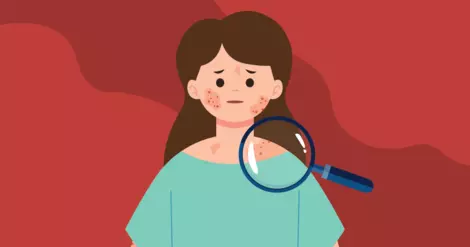
If you’re living with hives that appear and disappear every day, the constant itching and discomfort can take a real toll on your quality of life. These itchy bumps — called welts or wheals — can be puffy, raised, or swollen, and they can sometimes be painful or warm to the touch.
How long you’ve been experiencing these outbreaks can help determine whether they’re considered acute (short-term) or chronic (long-lasting). Either way, it’s a good idea to speak with a healthcare professional to understand what’s causing your hives and how to manage them effectively.
Hives can appear suddenly and disappear within hours. In many cases, hives flare up because of a temporary trigger, such as an allergy, an infection, medication, or stress. When that trigger fades or the allergen is removed, the hives often go away too.
However, not all hives have an obvious cause. Even when no clear trigger is found, hives may still come and go unpredictably. That pattern of welts fading and reappearing happens in people with both the acute and chronic forms of hives. The main difference lies in how long the cycle continues.
Hives themselves are very common: Nearly 1 in 4 people will experience them at some point. But only a small population — up to 5 percent — develops chronic hives that last for six weeks or longer. Understanding which type of hives you have can help your doctor determine the best next steps.
Hives can be either acute or chronic. The key difference between chronic hives (chronic urticaria) and acute hives (acute urticaria) is how long they last.
If your hives are present most days of the week for longer than six weeks, they’re considered chronic, even if the rash fades in one spot and reappears in another. If your hives come and go over a shorter period and then stop entirely, they’re classified as acute.
In short, acute hives are usually a short-term reaction, while chronic hives are a long-term condition that may not have an identifiable cause.
The causes of acute and chronic hives can overlap, but they differ in predictability and persistence.
Acute hives are typically linked to a clear, short-lived trigger. These triggers might include:
Chronic hives, on the other hand, are less straightforward. While they can be caused by similar factors, in most cases the exact cause remains unknown. In fact, between 80 percent and 90 percent of people with chronic hives have no identifiable trigger.
People with chronic hives are more likely to have underlying autoimmune conditions, such as lupus, rheumatoid arthritis, or thyroid disease. In these cases, the immune system mistakenly releases histamine and other chemicals that lead to recurring skin reactions.
Understanding these differences helps explain why acute hives tend to resolve quickly, while chronic hives can linger or recur despite lifestyle changes.
The appearance of acute and chronic hives is essentially identical — it’s their timing and behavior that set them apart.
Both cause itchy, raised bumps or circular welts that can vary in size. They can appear anywhere on the body, often moving around as old spots fade and new ones develop. The color of the welts can vary based on skin tone. On darker skin, they may appear as the same color of your skin or slightly darker or lighter, while on lighter skin, the bumps may appear red. They may also appear swollen.
With chronic hives, the welts can change shape and size while they disappear and reappear in new spots on your skin.
A single hive will usually go away without treatment within one to 24 hours, although angioedema (deeper swelling under the skin) can last longer. Acute hives tend to resolve completely once the cause is removed — for example, when an allergic reaction ends or an infection clears. Chronic hives, however, can last much longer. Many people find that their chronic hives go away on their own. Researchers estimate that about half of the people with chronic hives stop getting them within one year. Treatment can help reduce itching and other symptoms.
If you have hives that are happening every day or nearly every day, it’s probably time to see a doctor. The itchiness can be intense and uncomfortable, interrupting your sleep or activities. You may be referred to a dermatologist or allergist for specialized care.
Your healthcare provider will likely ask about your medical history, including when your symptoms started. Even though there might not be a clear cause for your hives, it can be a good idea to keep a journal or record of your flare-ups. Write down the foods you ate and the activities you were doing when you noticed a flare. This can help you and your doctor identify potential triggers.
Even if there is no clear cause, working closely with your doctor can help you find effective treatments to ease discomfort and irritation.
Treatment can vary slightly depending on whether your hives are acute or chronic. If you have acute hives, removing or avoiding the trigger usually brings quick relief. Over-the-counter antihistamines can reduce itching and swelling, and cool compresses or oatmeal baths can soothe irritated skin.
While those methods can be beneficial for chronic hives as well, chronic hives might require a longer-term plan. Your doctor might recommend high doses of antihistamines to better control symptoms. If antihistamines aren’t enough, there are additional medications they may recommend.
Because stress and fatigue can worsen flare-ups, lifestyle strategies — such as wearing loose clothing, avoiding alcohol or nonsteroidal anti-inflammatory drugs (NSAIDs), and maintaining good sleep — can also help reduce symptoms.
Hives can be extremely uncomfortable, and some people find that they cause mental or emotional symptoms. It’s very important to practice self-care and to remember that you can get help. Your hives will very likely go away at some point, and in the meantime, for many people, treatment provides relief.
On MyChronicHivesTeam, people share their experiences with chronic hives, get advice, and find support from others who understand.
Are your hives acute or chronic? Let others know in the comments below.
Get updates directly to your inbox.




 Continue with Facebook
Continue with Email
Continue with Facebook
Continue with Email
Continue with Facebook
Continue with Email
Continue with Facebook
Continue with Email
Become a member to get even more





 Join
Join


 Your Privacy Choices

This is a member-feature!
Sign up for free to view article comments.
I've been battling this for over 2 years now. Doctors don't seem to care. Some times it's so bad, I feel like I'm going to rip my skin off from itching.
We'd love to hear from you! Please share your name and email to post and read comments.
You'll also get the latest articles directly to your inbox.