
Powered By



 Continue with Facebook
Continue with Email
Continue with Facebook
Continue with Email
To be diagnosed with urticaria (chronic hives), you must have persistent symptoms that reappear for more than six weeks. Some people may have chronic hives for over a year. So, what are the symptoms of chronic hives that you should be on the lookout for?
When it comes to chronic hives, you’re not just dealing with skin issues. In addition to visible symptoms, you may also experience symptoms that affect your sleep and mental health. For many people, the condition interferes with daily routines, concentration, and confidence. Both types of chronic hives — chronic spontaneous urticaria (CSU) and chronic inducible urticaria (CIndU) — have the same symptoms.
Understanding the full range of symptoms can help you better track your condition and communicate with your healthcare provider or a dermatology specialist about effective treatments. Learn more about what chronic hives look like and other symptoms you may experience with this condition.
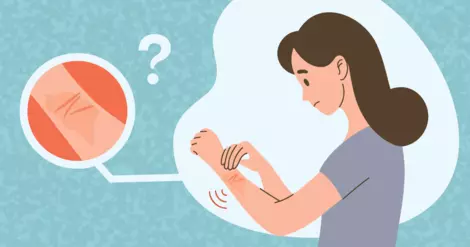
The most obvious sign of chronic hives is welts on the skin. Welts are raised, itchy bumps or patches of skin that can vary in size. They may appear small, like insect bites, or as bumps that connect to form a large skin rash. Welts from chronic hives can change shape, move around, and fade quickly. They often reappear in different places throughout the day, too.
The color of the welts can vary depending on the color of your skin. If you have light skin, hives may look pink or red. If you have dark skin, hives may appear slightly darker or lighter than your skin tone, or they may be the same color.
Blanching can be a way to test if you have hives. When you press the center of a welt, the discoloration will temporarily change to white or become pale.
Some people notice that hives appear after physical triggers such as exercise, heat, or tight clothing. Others find that emotional stress or certain allergens seem to worsen their symptoms. Keeping a symptom journal can help identify what factors may be causing flare-ups.
The most difficult symptom of chronic hives may be pruritus (itchiness). This relentless itching is caused by the release of histamine from cells in the skin. Hives occur when histamine is released by immune cells called mast cells. This release causes blood vessels to swell and the skin to develop itchy hives.
While itching from hives can happen at any time, many people find their symptoms worsen at night. Unfortunately, this can make it difficult to fall asleep and maintain good sleep habits.
Treatments, including prescription and over-the-counter anti-itch creams and antihistamines, can help ease the itchiness. If you experience itchiness at nighttime, your doctor may recommend an antihistamine that makes you feel drowsy to help you sleep.
Applying a cool compress can calm irritated skin and reduce inflammation. Loose, breathable fabrics like cotton can also help prevent further irritation. It may also help to avoid long, hot showers, which can dry out the skin and intensify itching.
Angioedema (swelling under the skin) may also be associated with chronic hives. Angioedema occurs when deeper layers of the skin swell due to fluid buildup. The sensation can feel tight or painful or even cause a burning sensation. You may also notice the affected area feels warm.
Angioedema can happen with or without the presence of hives. This swelling tends to happen on the soft parts of the body, typically around the eyes and face.
It’s important to keep an eye on the location where angioedema occurs. It can become life-threatening if it occurs in the throat or on the tongue, as this can make breathing or swallowing difficult. If you experience swelling in these areas, seek medical care right away.
Angioedema may go away on its own, but if it doesn’t, your doctor may recommend antihistamines or immunosuppressants.
One of the most frustrating parts of living with chronic urticaria is that it can be unpredictable. Chronic urticaria symptoms often shift throughout the day. They may disappear and return every few hours or appear in different spots on your body. Also, you may be frustrated because there’s often no clear cause of chronic hives.
Unplanned and unexpected symptoms can make your day-to-day tasks challenging. Due to the unpredictability of chronic hives, you may find that your mental health and overall well-being are affected. People with chronic hives experience anxiety and depression more often than people who don’t have the condition.
Some people with chronic hives may also feel self-conscious or embarrassed to be in public settings. This can cause people to avoid social situations if they’re concerned that a flare-up might occur.
Stress can also worsen hives by triggering the release of histamine. Practicing relaxation techniques such as mindfulness, gentle yoga, or deep breathing may help reduce stress-related flare-ups.
If you’re experiencing anxiety or depression with chronic hives, make sure to practice self-care like getting quality sleep and spending time with loved ones. It can also be helpful to talk about what you’re going through with a therapist or other mental health provider.
People with chronic hives may experience insomnia (trouble falling or staying asleep) because itching often intensifies at night. Not getting enough sleep can make it harder for your body to heal during the day, creating an unpleasant cycle.
Itching often gets worse at night because cortisol, a hormone in your body, naturally decreases during this time. Cortisol helps to control inflammation and, therefore, itching. So, if you have less cortisol, you’ll feel itchier. Body and skin temperature also change at night, and warm bedding can make your skin feel hotter and more sensitive to itching.
Another reason why itching may be worse at night is that you’re less distracted. During the daytime, you’re focused on daily activities that may distract you from uncomfortable sensations. However, at night there are fewer distractions, and you may be more aware of how itchy you feel.
Establishing a calming bedtime routine — like dimming lights, avoiding screens, and keeping a consistent sleep schedule — can help your body wind down. If you struggle with poor sleep because of chronic hives, talk to your healthcare provider. They may make adjustments to your treatment plan. You can also try using moisturizing lotions or anti-itch creams or taking a lukewarm bath to help you have a more restful night.
On MyChronicHivesTeam, people share their experiences with chronic hives, get advice, and find support from others who understand.
What symptoms of chronic hives do you experience? Let others know in the comments below.
Get updates directly to your inbox.


How do I get help with my hives because I have all the symptoms?


 Continue with Facebook
Continue with Email
Continue with Facebook
Continue with Email
Continue with Facebook
Continue with Email
Continue with Facebook
Continue with Email
Become a member to get even more





 Join
Join

 Your Privacy Choices

This is a member-feature!
Sign up for free to view article comments.
This disorder is so frustrating. I don’t do anything anymore but stay at home in the cool house. I tried to get my insurance to cover the Dupixent injection but they denied it. It’s terrible to get… read more
We'd love to hear from you! Please share your name and email to post and read comments.
You'll also get the latest articles directly to your inbox.