
Powered By



 Continue with Facebook
Continue with Email
Continue with Facebook
Continue with Email
Chronic (long-term) hives don’t always act the same way for everyone. Some people notice itchy welts (also called wheals or hives) that appear and disappear for no clear reason. Others find that their hives show up after specific triggers — such as heat, cold, or even water. No matter how they start, these outbreaks can be uncomfortable and challenging to manage, especially when the symptoms of chronic hives keep changing.
In this article, we’ll explain what the different types of chronic hives are and the similarities and differences between the two. You’ll also learn how the different types are diagnosed, why they might keep coming back, and how doctors typically treat them — even when the exact cause isn’t known.
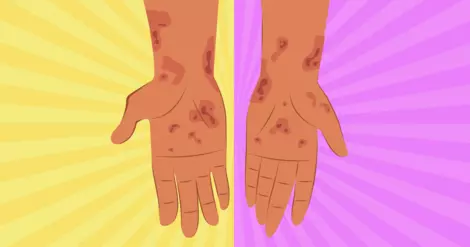
“Chronic urticaria” is the medical term for chronic hives. This condition causes raised, itchy bumps or welts that come and go most days of the week for at least six weeks. The bumps may feel hot or swollen at times and can show up nearly anywhere on the body, including the arms, face, stomach, legs, and even the hands or feet. They can vary in size and shape, and they may appear and reappear over time.
Chronic hives are divided into two main categories:
It’s important to know that these two subtypes of chronic hives aren’t the same as acute (short-term) hives. Acute hives — or acute urticaria — usually follow an allergic reaction or infection, and they usually fade on their own after a few days or weeks.
Chronic spontaneous urticaria is the most common type of chronic hives. “Spontaneous” means the hives appear without an obvious cause or trigger. They may come and go unpredictably, lasting for weeks, months, or years. In a European study of nearly 300 people diagnosed with CSU, about two-thirds experienced both hives and angioedema, which is deep swelling under the skin that often affects soft areas, like the lips, hands, or eyelids.
The exact cause of CSU is still not fully understood. However, researchers believe that the immune system plays a key role. In some people, the body’s immune system mistakenly activates itself, causing inflammation even when there’s no threat like an infection or allergen. This causes mast cells — a type of immune cells in the skin — to release histamine, a chemical that leads to itching, swelling, and welts.
Health experts believe there are two main subtypes of CSU.
In autoimmune CSU, the body makes autoantibodies, which are immune proteins that attack other proteins in the body. This process can be linked to other autoimmune conditions, such as thyroid disease or lupus.
In autoallergic CSU, the body reacts to its own proteins as if they were allergens. This causes mast cells to burst and release histamine, similar to an allergic reaction. This subtype is more common than autoimmune CSU. However, it’s possible for people to have features of both subtypes.
Chronic inducible urticaria is a type of chronic hives that’s triggered by specific factors, like heat or cold, sunlight, or pressure on the skin. It’s often called physical urticaria because symptoms show up after physical changes in the environment or the body.
Though CIndU is less common than CSU, it tends to last longer. People with CIndU are also less likely to experience remission (periods when symptoms temporarily go away), meaning that the hives may keep returning for many years.
Most people with CIndU begin having symptoms at a younger age than those with CSU. They’re also more likely to have other allergic conditions, like hay fever or asthma. On the other hand, autoimmune diseases are less common in people with CIndU. Angioedema is also less likely to occur.
Chronic inducible urticaria can be triggered by both physical and nonphysical stimuli.
Some of the most common types of physical triggers for CIndU include:
Nonphysical triggers for CIndU include:
The spontaneous and inducible forms of urticaria are similar in that they share many of the same symptoms — like itchy welts, discomfort, and skin swelling. However, they don’t always behave the same way.
The biggest difference is what causes the hives to appear. In CSU, symptoms seem to come out of nowhere, without a clear trigger. In CIndU, hives show up after something specific happens, like exposure to certain substances or temperatures.
CSU is also more common and more closely linked to immune system problems. CIndU, on the other hand, is rarer but tends to appear earlier and last longer. Research estimates that 7 percent to 30 percent of people with chronic urticaria can have both types at the same time, which can make diagnosis and treatment more complex.
Diagnosing the type of chronic hives you have usually starts with a detailed health history and physical exam. Your doctor will need to know when your hives first appeared, how long they last, and what seems to trigger them. Keeping a diary of your symptoms can be helpful.
To tell the difference between CSU and CIndU, your doctor may do provocation testing. This means gently exposing the skin to known triggers — like pressure, heat, or cold — to see if a reaction occurs. In some cases, blood tests or a skin biopsy (tissue sample) may be used to rule out other conditions.
Even if your doctor can’t figure out exactly what’s causing your chronic hives, effective treatments are available. Many people find relief with antihistamines, anti-itch creams, or other medications that calm the immune system and reduce symptoms.
Living with chronic hives can be unpredictable and frustrating, especially when you can’t figure out what’s causing your symptoms. For some people, this condition can affect sleep, mood, and overall quality of life. However, with the right care, many people find effective ways to manage flare-ups and feel more in control.
If you feel like chronic hives are affecting your daily functioning in life and work, talk to your healthcare team or schedule an appointment with an allergist or dermatologist (skin specialist). Together, you can find a treatment plan that works for you.
On MyChronicHivesTeam, people share their experiences with chronic hives, get advice, and find support from others who understand.
What type of chronic hives do you have? Let others know in the comments below.
Get updates directly to your inbox.



 Continue with Facebook
Continue with Email
Continue with Facebook
Continue with Email
Continue with Facebook
Continue with Email
Continue with Facebook
Continue with Email
Become a member to get even more





 Join
Join



 Your Privacy Choices

This is a member-feature!
Sign up for free to view article comments.
I have been dealing with hives for several years (CSU) and several different meds
We'd love to hear from you! Please share your name and email to post and read comments.
You'll also get the latest articles directly to your inbox.