
Powered By



 Continue with Facebook
Continue with Email
Continue with Facebook
Continue with Email
On the surface, rheumatoid arthritis (RA) and chronic hives might appear to have no relation. RA causes joint pain, while chronic hives (also called chronic urticaria) involve recurring or long-lasting itchy skin symptoms. Despite their differences, RA and chronic hives share more in common than you might realize.
It’s possible to have both RA and chronic hives at the same time, but neither condition causes the other. Still, they have some overlap in their causes, disease course, and overall impact. Here are seven things you should know about how the two conditions compare.
Chronic hives put you at an increased risk for autoimmune diseases, including RA and others like lupus and autoimmune thyroid disease. About 20 percent of people with chronic hives have at least one autoimmune disorder, and many have more than one autoimmune disease because these types of conditions often happen together.
In a study of people with chronic hives, almost 2 percent of participants also had RA. This is higher than the global prevalence of RA, which ranges from 0.24 percent to 1 percent of the adult population. People with RA are also more likely to develop hives.
While neither chronic hives nor RA causes the other, many of the same people develop both conditions due to shared underlying causes like immune system dysfunction and inflammation.
Chronic hives and RA both start with changes in the immune system. Although they both come from some form of immune system dysfunction, their exact causes are different. Here’s how they differ.
Rheumatoid arthritis is a chronic autoimmune disorder, which means your immune system is overreactive. In RA, your immune system attacks the tissue lining joints, such as your wrists, knees, and finger joints.
Inflammation plays a major role in the immune system’s attack on the joints. Over time, inflammation damages the cartilage under the joint lining and can deform or fuse the affected joint.
Inflammation from RA isn’t always limited to the joints. In RA and other autoimmune diseases, inflammation can cause symptoms in unexpected places too. You may experience symptoms related to your skin, eyes, lungs, and other organs.
Chronic hives isn’t always an autoimmune disease, but it is linked to activity within the immune system. The condition starts because of activated mast cells in the immune system.
Mast cells are important to your immune system. They monitor your body for invaders, like germs and parasites, and alert other immune cells. Mast cells can also get activated when there is no germ or parasite, like during allergic reactions.
Cases of chronic hives start when mast cells in the skin are overprotective against factors in your environment that are normally harmless. The mast cells can become activated by specific triggers like sunlight or pressure, or they can activate without a clear cause.
When there isn’t an identifiable trigger for a chronic hives flare, it’s called chronic spontaneous urticaria (CSU). CSU is the most common type of chronic hives.
It’s important to note that mast cells also exist in the synovium (joint linings) and are involved in RA inflammation. Sometimes, RA can cause systemic (whole-body) mast cell activation, which may trigger hives.
Both rheumatoid arthritis and chronic hives affect women at higher rates than men. According to Cleveland Clinic, women are up to three times more likely to have RA than men. They’re also more likely to have chronic urticaria than men.
A study published in the World Allergy Organization Journal suggests this difference could be explained by the fact that men are typically less likely to seek out medical attention.
Both RA and chronic hives can go through similar cycles of disease flare-ups (when you have symptoms) and periods of remission (when you don’t have symptoms). Flares can be unpredictable, but they often start in response to a trigger. Triggers can vary for everyone, but RA and chronic hives share some common ones.
RA flares can happen with or without a clear trigger. Unpredictable flares, or flares without triggers, may not improve on their own and without treatment. Here are some common triggers for RA flare-ups:
Similar to RA, chronic hives can appear without a clear trigger or cause. However, some cases of chronic hives can flare up in response to specific behaviors or environmental factors. This is known as chronic inducible urticaria (CIndU). Some of the most common triggers for chronic hives are:
It’s also possible to have a case of acute hives, often triggered by viruses or other causes. Hives become chronic when bumps and welts appear at least twice a week for more than six weeks.
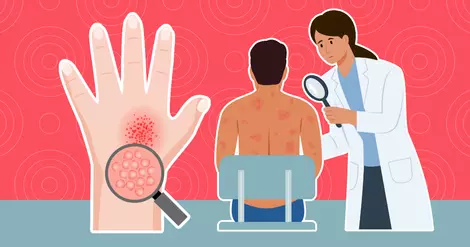
As mentioned earlier, it’s possible for RA to cause symptoms outside of the joints, including on the skin. Although it’s possible for RA to trigger hives (often acute hives) in some cases, chronic hives aren’t a common skin symptom of RA.
More often, skin problems associated with RA include:
Whether by themselves or together, RA and chronic hives can have a major impact on your quality of life. Symptoms of both conditions can affect your sleep, productivity, and mental health.
Visible chronic skin diseases like chronic hives can affect your mental and emotional well-being. Chronic hives are linked to a higher risk of mental health disorders such as depression and anxiety. In addition, symptoms like itching can prevent restful sleep.
Although RA symptoms differ from those of chronic hives, they can have similar impacts on your quality of life. RA symptoms like joint stiffness and swelling can disrupt sleep. Symptoms like joint stiffness and movement problems, which aren’t seen in chronic hives, cause distinct challenges in RA, including trouble performing everyday tasks.
Additionally, the chronic pain and daily limitations associated with RA can also affect mental health and self-perception. Chronic pain, in any form, including RA, can put you at a higher risk for depression and fatigue.
Managing RA or chronic hives with your doctor’s guidance can improve your quality of life. The two conditions require different treatment approaches, with distinct goals.
For chronic hives, the goal is to target and reduce specific symptoms like welts, swelling, and itchy skin. Antihistamines, which are allergy medications, help control itching and are often prescribed for chronic hives. Corticosteroids may also be prescribed to reduce the inflammation that contributes to symptoms.
In contrast, the goals of RA treatment are a little different. Instead of focusing only on symptoms, RA treatment often involves medications (or a combination of them) that aim to control disease activity. While you might still take corticosteroids or other anti-inflammatory medications for immediate relief of joint pain and swelling, disease-modifying antirheumatic drugs (DMARDs) or Janus kinase inhibitors (JAK inhibitors) may be prescribed to slow the disease’s progression.
For either condition, your doctor or healthcare provider may offer self-care tips to help you manage symptoms.
On MyChronicHivesTeam, people share their experiences with chronic hives, get advice, and find support from others who understand.
Do you experience joint symptoms with chronic hives? Let others know in the comments below.
Get updates directly to your inbox.




 Continue with Facebook
Continue with Email
Continue with Facebook
Continue with Email
Continue with Facebook
Continue with Email
Continue with Facebook
Continue with Email
Become a member to get even more





 Join
Join

 Your Privacy Choices

This is a member-feature!
Sign up for free to view article comments.
I've been treated with Xolair for 2 1/2 years to tone down chronic hives. How long have others been receiving monthly Xolair infusions?
We'd love to hear from you! Please share your name and email to post and read comments.
You'll also get the latest articles directly to your inbox.