
Powered By



 Continue with Facebook
Continue with Email
Continue with Facebook
Continue with Email
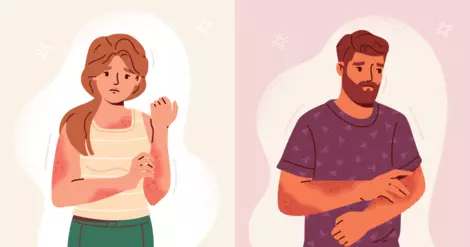
The itchiness and discomfort of chronic hives can be a big source of stress and anxiety. But can stress cause hives? There isn’t much evidence that suggests stress is an underlying cause of chronic hives, but anxiety and psychological stress may trigger flare-ups and worsen symptoms in people living with chronic hives.
Chronic hives — also known as chronic urticaria — cause the skin to erupt in itchy, discolored wheals (welts) that persist for longer than six weeks. Often, when the cause of chronic hives is unknown, it is referred to as chronic idiopathic urticaria (CIU) or chronic spontaneous urticaria (CSU). CIU is sometimes associated with other health conditions, such as autoimmune diseases, certain infections, and diseases like liver disease, lymphomas, vasculitis, and asthma.
Chronic inducible urticaria (CIndU) is a type of chronic hives that has known triggers, including skin friction or pressure, exposure to sunlight, body heat, or water. Both CSU and CIndU can also cause the tissue under the skin to swell, a condition known as angioedema.
Research has shown that there are complex interactions between mental well-being and skin health, which can affect skin conditions such as psoriasis, eczema, and chronic hives. Understanding how stress may affect your chronic hives can help you manage your condition better and improve your quality of life.
Scientists have found that the immune system, brain, and skin are connected through various pathways that can trigger skin diseases such as chronic hives. In people with chronic hives, abnormal immune function produces histamine and prostaglandins, compounds that cause itchy skin and other related symptoms.
Psychological stress, depression, and anxiety have been shown to affect the nervous system and activate immune system cells, which can aggravate symptoms in people with chronic hives. In people with chronic stress, the skin has been found to have a higher density of nerve fibers, which may contribute further to skin sensitivity.
Psychological and emotional stress produces cortisol, the stress hormone. Although cortisol typically has anti-inflammatory effects, in people with high levels of stress, the body may become used to increased cortisol levels. This imbalance may also cause an inflammatory response in the immune system that can worsen symptoms in people with chronic hives.
Some research has suggested that psychological stress may contribute to the development of chronic hives, but more studies are needed.
It’s important to note that stress alone can cause acute hives, which are different from chronic hives. Acute hives last for short periods of time — from a few hours to six weeks. Acute hives are often caused by an allergic reaction, but they can also be caused by psychological stress, which can trigger the release of histamine.
When stress causes acute hives, it’s also known as a stress rash or stress hives. Unlike chronic hives, stress hives rarely last more than six weeks. According to Cleveland Clinic, women, people in their 20s to 40s, and people who have had hives due to an allergen are more prone to acute hives caused by stress.
People with chronic hives have high rates of anxiety, depression, and stress. This can worsen the severity of chronic hives. As many as 60 percent of people with chronic hives experience psychological distress.
Chronic hives can severely impact quality of life and lead to poor sleep, social isolation, and self-consciousness due to debilitating symptoms. Taking antihistamines to treat hives can also cause fatigue and sedation as a side effect.
If you’re living with chronic hives, it’s essential to find effective ways to manage your stress. Reducing stress, anxiety, and depression can help reduce symptoms and flare-ups of chronic hives. If you’re having trouble managing symptoms, talk to your doctor and dermatology team about appropriate skin care and treatment options such as over-the-counter or prescription antihistamines, corticosteroids, and other immunosuppressant medications.
If you’re feeling like psychological stress is impacting your daily life, it’s important to talk to your doctor, who can give you a referral for mental health counseling, such as cognitive behavioral therapy or other types of talk therapy.
Here are other strategies you can use for self-care and to help manage some of the stressors that come with chronic hives.
Join an in-person or online support group, such as MyChronicHivesTeam. A support group can provide emotional support. You can also get tips for managing your condition and reducing stress from others who understand what you’re going through with chronic hives.
It’s important to cultivate and maintain close ties with family members and friends whom you can lean on. A good community is important for your health and well-being. If you’re feeling like you don’t have enough people in your life, consider joining group activities where you can meet new people.
Regular exercise or physical activity can improve your mood. Walking, bicycle riding, and gardening are some enjoyable ways to stay physically active. It’s important to stay active in ways that don’t exacerbate your chronic hives.
Your doctor can provide a referral to a physical therapist if you need help with exercise that’s appropriate for you.
Eating a nutritious diet and avoiding or limiting alcohol can help improve your overall health and wellness. Alcohol can also be a trigger for chronic hives and can interfere with sleep. Ask your doctor for a referral to a registered dietitian if you need guidance for healthy meal planning.
If you’re not sleeping well, it can be helpful to practice good sleep hygiene by winding down before bedtime, creating a comfortable and calm bedroom, sleeping at regular times, and avoiding snacks and drinks before bedtime. Be sure to talk to your doctor if you’re having trouble sleeping.
Meditation, mindfulness exercises, and practices such as deep breathing, yoga, and tai chi can help lift your spirits and reduce negative thoughts. You can find a lot of resources for these practices online.
Writing in a journal can help you keep track of what triggers your chronic hives, so you know what you need to avoid in order to reduce flares. You can share this information with your doctor as well.
A journal is also helpful because it lets you express feelings that you may not openly share with others. It can be helpful to release pent-up feelings. You can journal on your phone, on your computer, or with a pen and paper.
It’s important to make time for the things you enjoy. Hobbies and activities that you find pleasurable can help keep your mind busy and minimize stress. You might want to take a class and learn a new skill or simply set aside time for yourself. Whether it’s painting, hiking, listening to music, or taking walks with friends, doing activities that make you happy will benefit your mental health.
On MyChronicHivesTeam, people share their experiences with chronic hives, get advice, and find support from others who understand.
Have you found that stress aggravates your chronic hives? Let others know in the comments below.
Get updates directly to your inbox.




 Continue with Facebook
Continue with Email
Continue with Facebook
Continue with Email
Continue with Facebook
Continue with Email
Continue with Facebook
Continue with Email
Become a member to get even more





 Join
Join


 Your Privacy Choices

This is a member-feature!
Sign up for free to view article comments.
I get hives on my arms, shoulders and sometimes on my thighs.
We'd love to hear from you! Please share your name and email to post and read comments.
You'll also get the latest articles directly to your inbox.