
Powered By



Skin rashes can seem to appear out of nowhere, and the causes range from no big deal to something serious. Scabies and chronic hives are two possible reasons for itchy skin and bumpy rashes. At first, it can be hard to know which condition you have. Learning how these conditions are different can help you get the right treatment. Here’s how to tell scabies and chronic hives apart.
Scabies is caused by mites that are too small to see without a microscope. These tiny mites are too small to see without a microscope. Mites burrow into the top layer of the skin and lay eggs, which triggers an allergic reaction that leads to relentless itching and a rash.
Dermatologists can screen for mites during a physical exam. They might also perform a skin scraping, which involves taking a small amount of tissue to view under a microscope. They’ll check this sample for mites, eggs, or fecal pellets. Once scabies is diagnosed, treatment can start, and symptoms can improve.
Chronic hives — also called chronic urticaria — are raised, itchy welts that persist or recur for more than six weeks. Hives are a sign that the body’s immune system is overreacting, but the exact cause isn’t always easy to identify. Some people react to a specific trigger. When there’s a clear cause, the condition is called chronic inducible urticaria.
Triggers vary from person to person. Finding them can take time, testing, and some trial and error. Possible causes of chronic hives include:
However, in 80 percent to 90 percent of cases, doctors can’t identify a clear trigger. This is called chronic spontaneous (or idiopathic) urticaria. Unlike scabies, which can be confirmed with medical testing, chronic hives are usually diagnosed by ruling out other skin conditions and reviewing your medical history.
Scabies is caused by a parasite. The mites dig tunnels into the skin, where they live, eat, and reproduce. These areas develop thin, wavy tracks that are bumpy and contain small blisters.
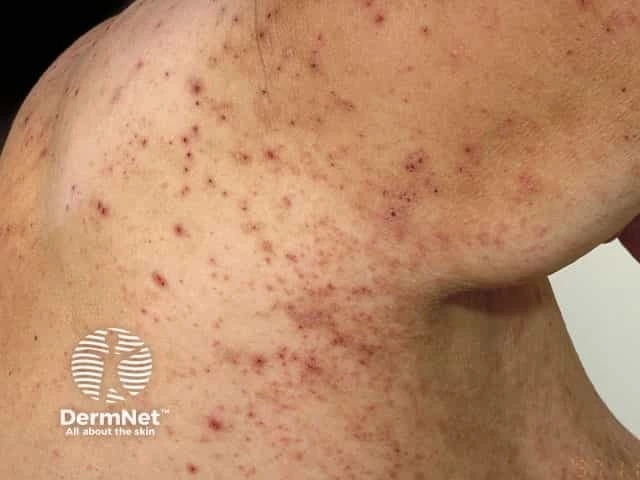
It’s common for scabies to affect skin folds, like the armpits or waist. Scabies can also be found on the wrists and ankles, between the fingers, on the face and scalp, and on the soles of the feet or palms of the hands.
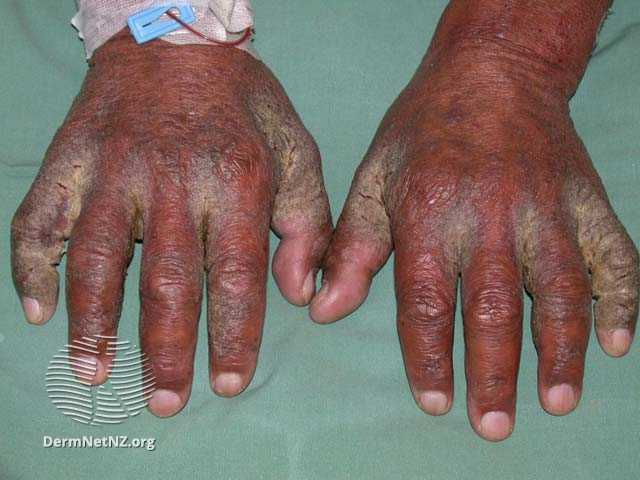
You won’t see tunnels with chronic hives, which instead may cause:

Unlike scabies, chronic hives don’t cause skin tracks. The symptoms can show up anywhere, not just in certain spots. Welts can vary in size and color. Sometimes, several welts group together to form wheals.
Scabies is highly contagious and spreads easily through close contact. You can pass scabies to others even if you don’t yet have symptoms, which can take up to six weeks to show up. This means you can spread scabies before you know you have it.
People who have had close skin-to-skin or sexual contact with you or who live with you may need scabies treatment, too, even if they’re not showing symptoms. Because scabies spreads so easily, your dermatologist may recommend treating everyone you’ve had close contact with as a precaution.
On the other hand, chronic hives aren’t contagious, so you won’t spread your skin symptoms to others in your home. However, chronic hives may be genetically linked, so your relatives might have a higher chance of getting hives, too. Even so, people in your household don’t need treatment for hives unless they have symptoms.
With scabies, areas with mites are extremely itchy. The itching doesn’t get better until the mites are treated and killed. Some people notice more intense itching at night, making it hard to sleep. There’s usually no time when you won’t feel itchy, unless you use products to temporarily relieve the itch.
Chronic hives aren’t constantly itchy. The itchiness can be just as intense, but it tends to come and go. Itchy spots can move from one part of the body to another within 24 hours. It’s important to let your doctor know the details of how and when you feel itchy — these details can help them rule out other conditions and diagnose chronic hives.
The main goal of scabies treatment is to kill the mites. After the mites are eliminated, you need to take steps to avoid getting scabies again. Typical treatments include:
You’ll also need to decontaminate your surroundings to prevent another infestation. Wash bedding, towels, and clothing in hot water and dry them on high heat. Items that can’t be washed should be sealed in plastic bags for a few days to kill scabies mites.
Managing chronic hives involves more than just treating the skin — it also means reducing flare-ups and controlling symptoms over time. This usually takes a combination of treatments, such as:
Rubbing ice on itchy areas, applying cooling lotions with menthol, and taking lukewarm or cold showers (depending on your triggers) may also help you feel better when you’re having a flare-up of chronic hives.
The most important step is to have a dermatologist check your symptoms. It’s easy to confuse scabies, chronic hives, and other skin conditions, especially when trying to diagnose yourself. Seeing a qualified healthcare provider helps ensure you get the right treatment for your skin.
On MyChronicHivesTeam, people share their experiences with chronic hives, get advice, and find support from others who understand.
Have you experienced scabies or chronic hives? Let others know in the comments below.
Get updates directly to your inbox.





 Continue with Facebook
Continue with Email
Continue with Facebook
Continue with Email
Continue with Facebook
Continue with Email
Continue with Facebook
Continue with Email
Become a member to get even more





 Join
Join

 Your Privacy Choices

This is a member-feature!
Sign up for free to view article comments.
So..My husband is a Contractor and had worked on couple of not so clean homes and showed me what he said was bugs in his skin!! I thought he was just over exaggerating , but he went to Urgent Care and… read more
We'd love to hear from you! Please share your name and email to post and read comments.
You'll also get the latest articles directly to your inbox.