
Powered By


For years, Nicole Shelton tried to make sense of a condition that often left her uncomfortable in her own body. Living with chronic spontaneous urticaria (CSU), also called chronic hives, brought uncertainty, frustration, and periods of self-blame.
Over time, however, Nicole learned that managing the condition was not only about finding the right treatment. It was also about asking questions, speaking up, and recognizing progress in whatever form it came.
Sign up to view the results!
 Continue with Facebook
Continue with Email
Continue with Facebook
Continue with Email
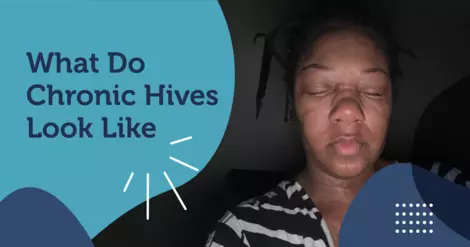
After years of navigating chronic hives, Nicole, a speech-pathologist from Atlanta, looked back on the lessons she wished she had known from the beginning.
Things I Wish I Knew Earlier About Chronic Hives
Nicole shares how self-advocacy, asking questions, and exploring treatment options helped her manage chronic hives.
Watch More Videos From Nicole
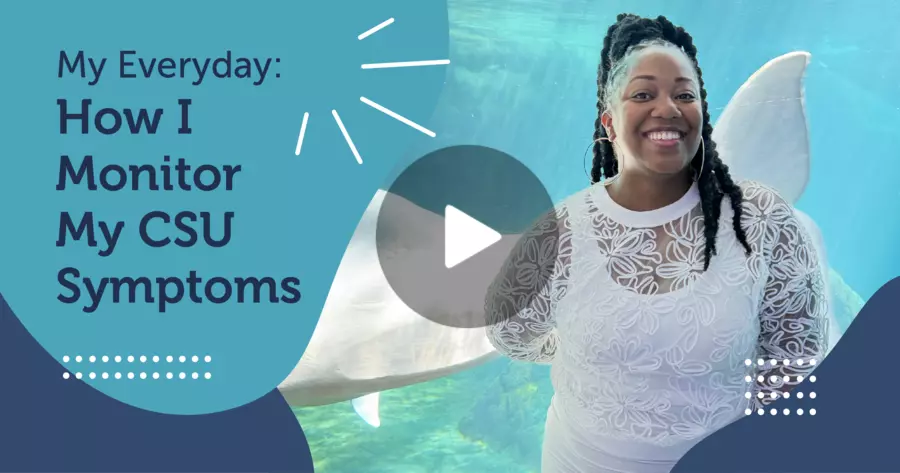
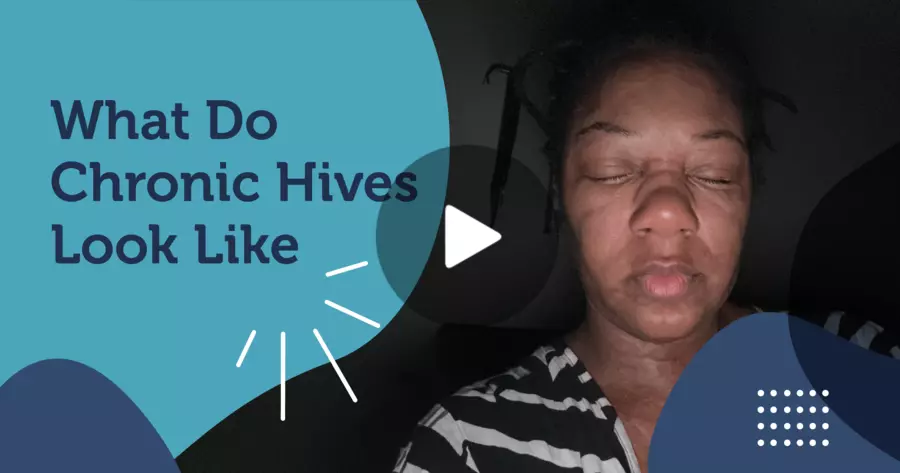
00:00:00:06 - 00:00:19:08
Nicole Shelton
I wish someone had told me on day one that it wasn’t all my fault. I think on this journey of chronic hives, you blame yourself for your diet, for not understanding the condition, for not taking the medications. And I wish someone had told me that this was not all my fault.
00:00:19:10 - 00:00:44:17
Nicole Shelton
No one else is feeling what you're feeling. No one else is uncomfortable as you are in your own body. So, advocating for yourself is truly your first act of self-love. Advocating for myself came from my mom. The research is not always aligned for success in African American people, so I've learned that it's better to ask the question. To stay silent is to stay with no answers.
00:00:44:18 - 00:01:06:23
Nicole Shelton
Being silent is never a choice. I feel like as Black women, we really have to speak up in those spaces. I wouldn’t continue a treatment for over a year that wasn’t helping my hives. That conviction of not accepting treatments that won’t work within one year came from research. It came from talking with other people and seeing that there are more options out there.
00:01:07:00 - 00:01:29:00
Nicole Shelton
Don’t get stuck in one treatment. Don’t get stuck with one doctor. If you don't like that doctor, if you don't think things are going well, advocate for yourself and try something new. I recently started a new treatment, and I had my first week without hives within eight years. That was one of the best weeks I’ve had in a long time.
00:01:29:02 - 00:01:50:14
Nicole Shelton
Having a week without hives was like the music playing, the perfect summer day, birds chirping in the background. It was amazing. That’s what it felt like, like I was on cloud nine. It was just no end to the fun that I was having. So, don’t think, “I have chronic hives, period. That’s it. It’s over. It’s nothing I can do.”
00:01:50:15 - 00:02:16:00
Nicole Shelton
Look at chronic highs as a comma. There are multiple things you can do that can help improve your outcomes. A win for me is maybe not having 30 hives, but having 10 hives. A win for me is having hives every other day versus every day. A win is having hives multiple times a week to twice a week. So learn to take the wins with the hives along the way.
00:02:16:04 - 00:02:20:02
Nicole Shelton
Learn more and connect at MyChronicHivesTeam.com.
Living with unexplained symptoms sometimes led Nicole to question her own choices. She wondered whether her diet, her understanding of the condition, or the way she took medication had contributed to her hives.
“I wish someone had told me on day one that it wasn’t all my fault,” she said. “On this journey of chronic hives, you blame yourself for your diet, for not understanding the condition, for not taking the medications. And I wish someone had told me that this was not all my fault.”
Over time, Nicole learned to let go of that self-blame. Chronic hives were something she lived with, not a personal failure.

Nicole said her mother had inspired her to advocate for herself. As a Black person navigating healthcare, she also recognized that medical research didn’t always reflect the experiences of African American communities.
“The research is not always aligned for success in African American people,” she said. “So I’ve learned that it’s better to ask the question. To stay silent is to stay with no answers.”
For Nicole, self-advocacy meant asking questions, sharing concerns, and seeking another perspective when she didn’t feel heard.
“No one else is feeling what you’re feeling. No one else is as uncomfortable as you are in your own body,” she said. “So advocating for yourself is truly your first act of self-love.”
Research and conversations with other people helped Nicole learn that more options might be available.
“Don’t get stuck in one treatment. Don’t get stuck with one doctor. If you don’t like that doctor, if you don’t think things are going well, advocate for yourself and try something new,” she said.
Treatment decisions are personal, and each option can affect people differently. Nicole’s experience showed how important it was to talk openly with a healthcare provider about whether a plan was helping and what other approaches might be considered.
After eight years with hives, Nicole began a new CSU treatment and experienced her first hive-free week. “That was one of the best weeks I’ve had in a long time,” she said.
Nicole learned that progress doesn’t always mean every hive disappears. Sometimes, a win is having fewer hives or having them less often.
“Look at chronic hives as a comma. There are multiple things you can do that can help improve your outcomes,” she said.
She encouraged others to recognize each step forward. “Learn to take the wins with the hives along the way,” she said.
On MyChronicHivesTeam, people share their experiences with chronic hives, get advice, and find support from others who understand.
What do you wish you knew earlier about chronic hives? Let others know in the comments below.
Get updates directly to your inbox.


I have chronic hives & have had 3 monthly injections of Xolair. My symptoms have disappeared. Now I have vertigo. Can there be a connection?

 Continue with Facebook
Continue with Email
Continue with Facebook
Continue with Email
Continue with Facebook
Continue with Email
Continue with Facebook
Continue with Email

 Join
Join


 Your Privacy Choices

This is a member-feature!
Sign up for free to view article comments.
So far I’m on a twice daily pill RHAPSIDO…that seems to be working. I pray
We'd love to hear from you! Please share your name and email to post and read comments.
You'll also get the latest articles directly to your inbox.