
Powered By



If you’ve ever noticed red or discolored lines on your skin that look like scratches, you might wonder if they’re hives. These marks can be alarming, especially if they appear suddenly and seem to spread. While some causes are harmless, others may need medical attention. In this article, we’ll explore what these lines could mean, how they relate to chronic hives, and when to seek help.
Hives, also called urticaria, are raised, itchy welts that can appear anywhere on the body. When symptoms of hives last more than six weeks at a time, they’re considered chronic. There are two main types of chronic hives:
Anyone can develop chronic hives, and it’s estimated that roughly 5 percent of people do at some point in their lives. Women between the ages of 30 and 50 are more likely to develop this condition.
If you have red, pink, purple, or discolored lines on your skin that are raised and itchy, and which fade within about 30 minutes, they may be related to dermographism, a form of chronic inducible urticaria. Dermographism affects about 2 percent to 5 percent of the population, and it happens when pressure or scratching causes your body to think there’s an allergen. This releases a chemical called histamine to get rid of the suspected allergen, which causes symptoms such as swelling and discoloration.

These marks, or skin writings, usually show up on the skin within five to seven minutes and can appear in different colors depending on your skin tone. For some individuals, these marks may appear pink, red, purple, brown, or even the same color as the surrounding skin with slight swelling.
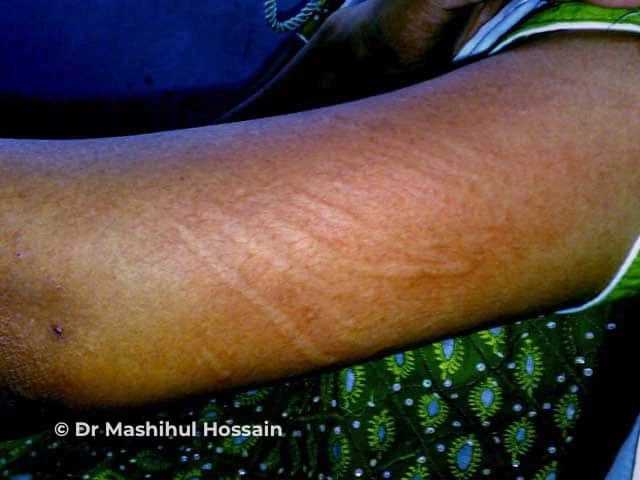
Not all streaks are hives. Here are a few other conditions that can cause similar marks on the skin.
For some people, certain allergens can cause allergy symptoms on the skin, like itchy welts and rashes. Allergic reactions can occur from various substances, including certain foods, medications, insect bites, or environmental allergens like pollen or pet dander.
Contact dermatitis, another type of skin reaction, happens when your skin comes into direct contact with an irritating substance or allergen. This may include plants like poison ivy, certain skin care products, or metals. As a result, your immune system responds, which can cause swelling, inflammation, or a rash that looks purple, red, or darker than your skin tone.
An allergic skin condition called eczema, or atopic dermatitis, can create red or brown patches on the skin, too.
Seek immediate care if you have symptoms of a severe allergic reaction, which is known as anaphylaxis. This is life-threatening and can cause trouble breathing, dizziness, swooning, a drop in blood pressure, and a weak pulse.
New stretch marks on the skin can cause discoloration that appears pink, red, blue, purple, or brown. They typically develop in areas like the abdomen, thighs, or arms after weight changes, pregnancy, or growth spurts. Sometimes stretch marks can be itchy or feel irritated. However, unlike hives, stretch marks usually look like sunken lines in the skin rather than raised.
Mottled skin, also referred to as livedo reticularis, creates a temporary lacelike pattern underneath the skin that often looks bluish-red or brown. Mottled skin happens when the blood flow to tiny blood vessels in the skin is disrupted or reduced. It commonly occurs when the skin is exposed to cold temperatures, but it can also occur for unknown reasons or due to underlying health conditions like a vascular disease, an autoimmune disease, or an infection.
If you notice a lacelike pattern on your skin, talk to your doctor. It could be a sign of another medical condition, so it’s important to get a diagnosis soon.
These are small, widened blood vessels near the skin’s surface that appear as fine red, purple, or blue lines. They’re common on the face, neck, chest, or legs and may be linked to sun damage, hormones, medication side effects, or spicy foods. Telangiectasia is sometimes called spider veins.
For the most part, telangiectasia is harmless. In some cases, it may indicate issues with blood flow. If you notice changes in skin color, swelling, or feelings of warmth alongside telangiectasia, consult your healthcare provider.
A bacterial skin infection, such as cellulitis, can cause red streaks that spread outward from a wound. These lines often come with pain, swelling, warm skin, and sometimes a fever.
If left untreated, skin infections can cause serious complications. Seek urgent medical care if you notice any large areas of inflamed or black skin, a fever, or tingling in the body. Also keep an eye out for any signs of discoloration, warmth, pain, and swelling spreading from a wound, and report them to a healthcare professional.
If you do notice red or discolored lines on your skin, ask yourself these three questions:
If you answered yes to any of these questions, talk to your doctor. They will examine your skin for signs of chronic hives and ask you about related symptoms you may be experiencing.
If your healthcare team suspects you have dermographism specifically, they may purposefully agitate your skin to see how it reacts. To do this, doctors will perform a simple test where they use a tongue depressor or similar object to stroke the skin firmly. If raised lines appear within a few minutes, this helps confirm the diagnosis of dermographism.
For other forms of chronic hives, you may require additional testing. Your healthcare provider may order blood tests, allergy tests, and other diagnostic procedures to rule out other underlying conditions and identify potential triggers. Your doctor may also refer you to other healthcare providers, like a dermatologist or allergist, for treatment.
On MyChronicHivesTeam, people share their experiences with chronic hives, get advice, and find support from others who understand.
How have you determined the cause of red lines on your skin? Let others know in the comments below.
Get updates directly to your inbox.





 Continue with Facebook
Continue with Email
Continue with Facebook
Continue with Email
Continue with Facebook
Continue with Email
Continue with Facebook
Continue with Email
Become a member to get even more





 Join
Join

 Your Privacy Choices

This is a member-feature!
Sign up for free to view article comments.
Me too same exact thing I’ve made my nose scab up on the inside trying to get that sticky stuff out of my nose which was a whole other painful situation
We'd love to hear from you! Please share your name and email to post and read comments.
You'll also get the latest articles directly to your inbox.