
Powered By



 Continue with Facebook
Continue with Email
Continue with Facebook
Continue with Email
One day, you’re feeding your baby like normal, and everything seems fine. Then, what looks like a skin rash suddenly starts spreading across their arms or face. This experience can be worrying for parents, and many may wonder if it’s something they ate. While food allergies often cause quick, short-term skin reactions — known as acute hives — they can sometimes also play a role in chronic (long-term) hives that last for weeks or even months.
In this article, we’ll discuss how food allergies can trigger hives in babies and how to tell the difference between acute and chronic hives in kids. You’ll also learn how to spot serious symptoms and manage flare-ups safely, and when to seek specialty or emergency care for your baby.
Hives — also known by the medical term urticaria — are raised, itchy welts that usually appear suddenly and go away on their own within a day. These short-term outbreaks are called acute hives. They’re often linked to infections, medications, or certain food allergies. Food allergies account for a small but important share of acute hives in children.
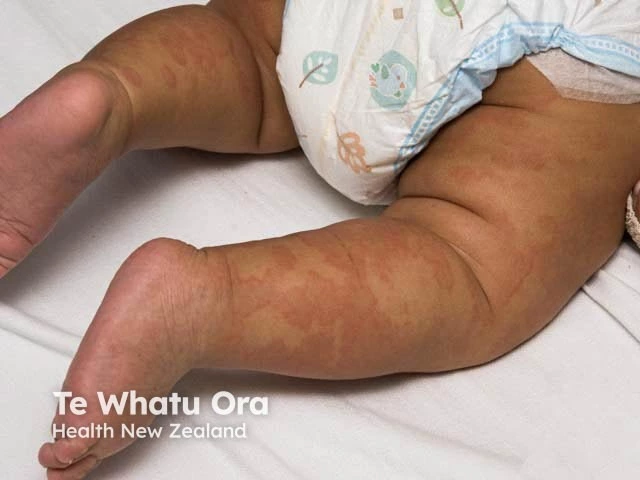
Chronic hives, on the other hand, happen at least twice a week for six weeks or longer. They’re further divided into two subtypes: chronic inducible urticaria (CIndU) and chronic spontaneous urticaria (CSU). CIndU happens after contact with a physical or environmental trigger. In CSU, hives appear without a clear cause. In children, acute hives are more common than either type of chronic hives.
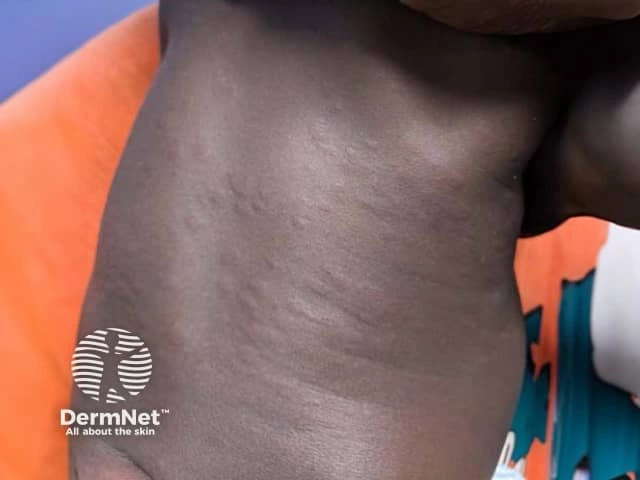
Food allergies can cause hives — especially acute hives. When a baby eats a food their body sees as harmful, the immune system reacts by releasing histamine and other chemicals that lead to hives on the skin. These hives often appear within minutes to hours after eating the food. They often clear up on their own after the allergen is out of the system.
Research shows that food allergies rarely lead to chronic hives. However, food allergies may still be involved in chronic hives in some cases. For example, certain foods may worsen hives symptoms or spark a flare-up in some people. Some common culprits include certain vegetables and fruits, fermented foods, food additives, and seafood.
For most people with chronic hives, the immune system remains active for reasons unrelated to food — such as infections, autoimmune activity, or other underlying medical conditions.
When hives are caused by a food allergy, they’re usually part of a short-term allergic reaction that happens soon after eating the food. The reaction begins when the immune system mistakes certain food proteins as harmful invaders.
To fight off the “threat,” the immune system produces a special type of antibody called IgE. These IgE antibodies attach to immune cells in the skin and tissue. When kids eat foods they are allergic to, the food proteins attach to these IgE antibodies and make the immune cells release histamine — a chemical that makes blood vessels leak fluid. This leads to the symptoms of an allergic reaction, including hives.
Even a small bite of the trigger food can cause symptoms, especially in babies with severe allergies. Because histamine affects more than just the skin, hives can appear alongside other symptoms of an allergic reaction, such as a runny nose, vomiting, or mild swelling. Symptoms occur within two hours of eating the food, and those like hives can last for a day or so.
Some of the most common food allergies for babies and young children include:
These nine food allergens account for about 90 percent of all food allergies. However, a person can develop an allergy to any kind of food.
Even trace amounts of food allergens can trigger hives. If your baby develops a rash or swelling after trying a new food, stop offering it and call your pediatrician before reintroducing it. Elimination diets (avoiding suspected foods) should only be done under medical supervision to avoid missing key nutrients.
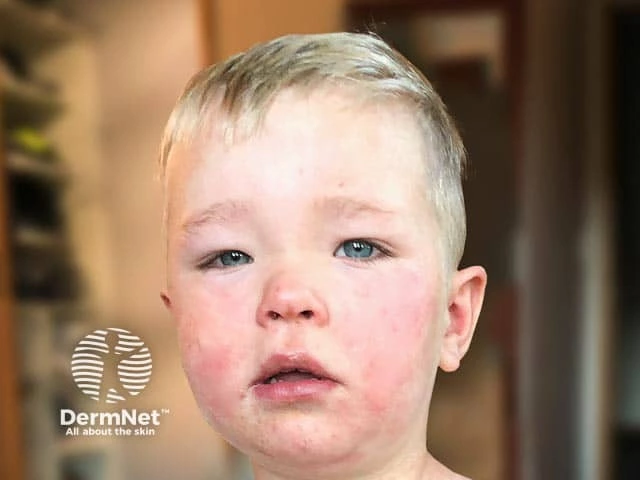
When hives keep coming back, it’s easy to assume that a certain food may be to blame, but that’s not always the case. Hives caused by food allergies usually have a clear pattern: They appear soon after eating and fade once the allergen is cleared from the body. Chronic hives, by contrast, tend to show up unpredictably, without a link to meals.
Other factors can mimic food allergy hives. Viral infections are one of the most common causes of recurring hives in babies, especially after colds or stomach bugs. Environmental triggers — like heat, cold, or pressure on the skin — can also trigger chronic hives. In some children, the immune system itself becomes overly sensitive, releasing histamine even when no allergen is present.
While most hives are mild, sometimes they can signal a more serious condition called anaphylaxis. Anaphylaxis is a life-threatening allergic reaction that affects multiple parts of the body, not just the skin. It happens when the immune system releases a flood of chemicals that can cause the airways to tighten, blood pressure to drop, and breathing to become difficult.
In babies and young children, signs of anaphylaxis may include:
Becoming limp, lightheaded, or unusually sleepy
If you ever suspect your child may be experiencing anaphylaxis, call 911 or emergency services right away. Give epinephrine if your baby has an epinephrine autoinjector, and then go to the nearest emergency department. Even if symptoms improve, emergency care is essential because a second wave of symptoms can occur. Quick treatment can save your baby’s life.
If your baby’s hives keep returning, your doctor may refer you to an allergist for testing. They’ll ask about your baby’s symptoms, feeding history, and any other patterns you’ve noticed. They may do skin allergy tests or a blood test to check for IgE antibodies, which show how the immune system reacts to certain foods.
In some cases, a supervised food challenge may be done. This involves having your baby eat a small amount of the suspected food under medical supervision to watch for a reaction. In older children, food challenges can also help determine whether the child has outgrown an allergy.
Treatment will depend on what’s causing your baby’s hives. For food-related hives, the first step is avoiding the trigger food as directed by your healthcare provider. Mild hives often improve with antihistamines or other over-the-counter medications approved for infants or young children. Cool compresses and loose clothing can also help ease itching.
If the hives don’t resolve with at-home or over-the-counter treatments, your doctor may suggest stronger medicines to help calm the immune system. Always follow your pediatrician’s advice, and never give new medications without medical guidance.
Call your pediatrician if your baby’s hives keep coming back or seem to get worse over time. You should also reach out if hives appear with trouble swallowing, fever, swelling, or a hoarse voice or cough. A referral to an allergist or dermatologist may help identify hidden triggers or rule out other conditions.
Seek emergency care right away if your baby has trouble breathing, wheezing, vomiting, or becomes pale or limp. These may be signs of a severe allergic reaction that requires urgent treatment.
On MyChronicHivesTeam, people share their experiences with chronic hives, get advice, and find support from others who understand.
What food allergies does your baby have? What treatments help them the most? Let others know in the comments below.
Get updates directly to your inbox.



 Continue with Facebook
Continue with Email
Continue with Facebook
Continue with Email
Continue with Facebook
Continue with Email
Continue with Facebook
Continue with Email
Become a member to get even more





 Join
Join

 Your Privacy Choices

This is a member-feature!
Sign up for free to view article comments.
We'd love to hear from you! Please share your name and email to post and read comments.
You'll also get the latest articles directly to your inbox.