
Powered By



 Continue with Facebook
Continue with Email
Continue with Facebook
Continue with Email
Chronic hives may cause itchy, discolored bumps on your skin. But there is a wide variety of other possible causes for symptoms like these. One of these is bugbites.
If you have bumps on your skin that are making you uncomfortable and you’re wondering if they’re from chronic hives or bugbites, here are some ways you can tell the difference. However, you may still need to see a doctor or a dermatologist to get the right diagnosis and figure out what’s behind your skin discomfort.
The symptoms of chronic hives and bugbites have some similarities in how they appear, but there are some key differences that can help you tell them apart. Both chronic hives and bugbites can cause itchy bumps on your skin that are red if you have fair skin but might be purple or brown if you have darker or black skin.

Beyond that, their appearance is very different. Chronic hives (also called chronic urticaria) show up in arrays or clusters of welts or wheals. These can:
While insect bites may show up as a raised bump or group of bumps, they don’t shift and change. A bugbite will generally be discolored and swell somewhat, and then those symptoms will gradually fade as the bite heals. The bumps only show up where the bug actually bit you, and they usually cover a smaller area of the body than hives do.
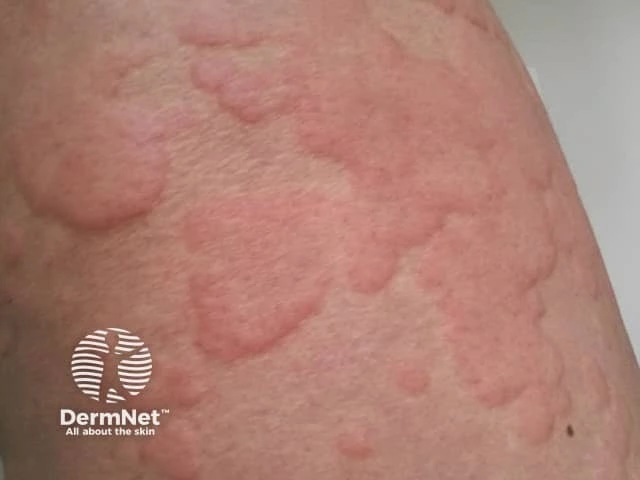
Additionally, bugbites are usually smaller than hives, and they’re generally more round. Though chronic hives can technically be any size, they’re most often larger than bugbites. Sometimes, you may actually be able to see puncture marks or a hole in your skin where you were bitten or stung, too. Chronic hives won’t have this.
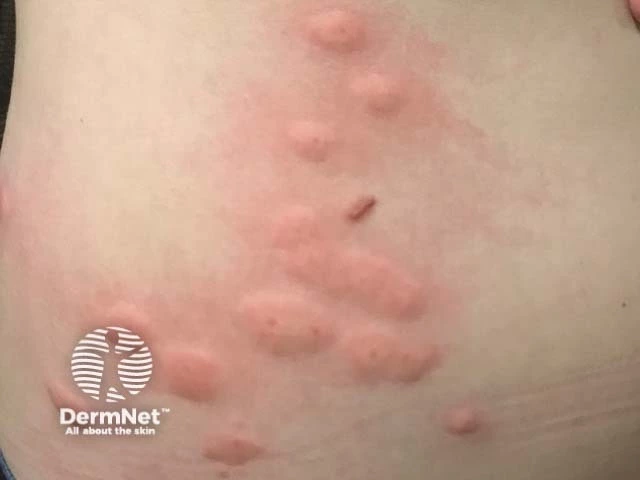
Finally, groups of bugbites may occur, but they most often look like a bunch of individual, small, discolored circles. You might be able to follow the path of the bug that bit you as it walked across your skin. Chronic hives tend to blend together, and they’re more like undefined blobs than small circles.
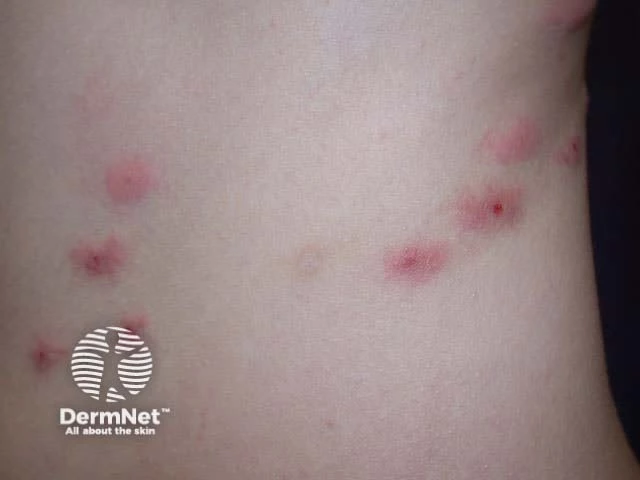
There may be differences in how chronic hives and bugbites feel. Both tend to itch, but other sensations are likely different. Chronic hives may cause a painful or stinging sensation. Bugbites, on the other hand, may feel like they’re burning or even like your skin is tingling where the injury occurred. This is the venom or saliva from the bug entering your body and spreading there.
There’s some overlap here. Burning, after all, is a sort of pain, and burns may also sting. However, if you focus on what you’re feeling, you may be able to figure out if you only feel a sting, or if it also feels like your skin in the affected area is hotter than it should be.
The itching that you experience with bugbites can be different from that associated with chronic hives, too. Bugbites will itch wherever you were bitten. With chronic hives, you can itch all over your body. This may or may not be limited to where you experience the hives.
Different things will trigger chronic hives versus bugbites, too. When it comes to a bugbite, the trigger is often easy to identify, even if you don’t know exactly what kind of bug bit or stung you.
While bugbites can trigger hives, so can many other things. Physical activity, getting too warm, and stress are common triggers. So are cold, exposure to vibrations, the sun, pressure against your skin, and a variety of medical conditions like infections. An allergic reaction to foods you eat or medications you take can also cause them.
If you know the cause of chronic hives, it’s called chronic inducible urticaria (CIndU). These common causes of chronic hives are clearly different from what causes bugbites.
Sometimes, you won’t know what triggers chronic hives. These are called chronic spontaneous urticaria (CSU) or chronic idiopathic urticaria (CIU). With bugbites, you might (but not always) know exactly when you were bit or by what.
When you have skin symptoms because of a bugbite, they’ll generally start soon after you get bitten and come on fast. They’ll get worse for a little while, but they’re generally gone within a week. Symptoms tend to be consistent, with relatively high initial discomfort followed by a slow reduction in symptoms. If you have multiple bites from the same bug, they should all act roughly the same way.
With chronic hives, symptoms can be all over the place. Your hives may appear, disappear, and then come back. Overall, you’ll see them at least twice each week for six or more weeks. They can go away for an extended period of time, then come back, and you may have symptoms for months or years.
Everything about chronic hives can shift, and you’ll generally see them change regularly even if you continue to have symptoms consistently. There’s no orderly progression of symptoms that you can expect to see with chronic hives.
You may need medical help for both chronic hives and bugbites, but usually for different reasons.
Bugbites may require medical attention for a few reasons. If you get bitten by something with powerful venom, you’ll need treatment right away. Bugbites can also get infected, which also requires help from a healthcare professional. Some bugs can also transmit other diseases, which will require medical treatment.
If you’re bitten by something dangerous and you need emergency treatment, you may have the following symptoms:
If a bugbite gets infected, you’ll see other symptoms. If you’re not sure whether you’re experiencing a medical emergency, ask a healthcare professional for advice. These infections may look like:
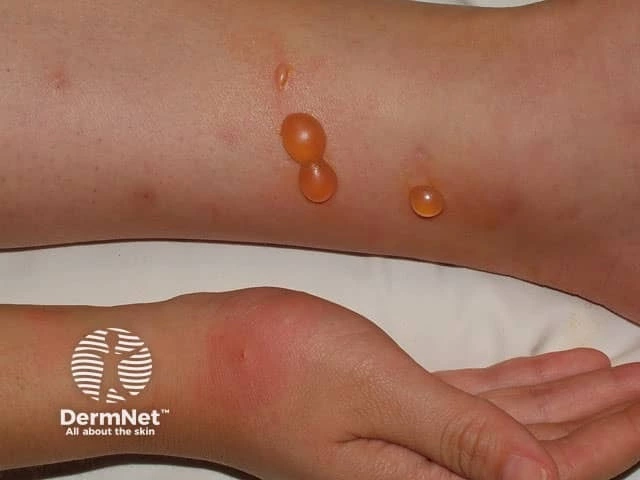
In addition, you should see a doctor if your bugbite itches severely or swells a lot, is close to your eyes, or if you have several bee or wasp stings.
While most insect bites are just uncomfortable for a few days, some bugs can give you a wide variety of diseases. If you feel generally ill, like you have a fever, joint pain, body aches, chills, swollen lymph nodes, or an upset stomach within two weeks after a bite, see a healthcare provider right away. Some of these diseases can cause more specific symptoms, like a rash that looks like a bull’s-eye or a headache behind your eyes. These also require medical care.

Both chronic hives and bugbites can have a connection to a serious allergic reaction called anaphylaxis, which can be life-threatening, though this isn’t common with chronic hives. If you experience these symptoms, you’ll need to head to an emergency room. Look for:
Even if you’re not having symptoms of a severe allergic reaction, you may need to see a doctor for chronic hives. If they’re significantly impacting your quality of life or not going away, your doctor can help you find the treatment options you need.
On MyChronicHivesTeam, people share their experiences with chronic hives, get advice, and find support from others who understand.
How do you tell the difference between chronic hives and bugbites? Let others know in the comments below.
Get updates directly to your inbox.




 Continue with Facebook
Continue with Email
Continue with Facebook
Continue with Email
Continue with Facebook
Continue with Email
Continue with Facebook
Continue with Email
Become a member to get even more





 Join
Join

 Your Privacy Choices

This is a member-feature!
Sign up for free to view article comments.
We'd love to hear from you! Please share your name and email to post and read comments.
You'll also get the latest articles directly to your inbox.